Real-time content filtering

The internet, minus the parts you'd rather your kids skip.

WebSafe reads pages the way a person would — understanding context, not just matching a word list — and quietly steps in on images, comments and headlines your child's age isn't ready for. No blocklists to maintain. No browsing history sent to us.

Drag the slider on the right — that's an actual news homepage, filtered live by WebSafe's on-page detection.


A news homepage with no filtering applied The same homepage with WebSafe blurring a sensitive photo and hiding a headline No filter With WebSafe
Live crop of a real news homepage Drag to compare
Simple to set up, simple to trust

No app to babysit, no list of banned sites to keep current — just a five-minute setup, and a philosophy about what a parent actually needs to see.

A — How to install
1

Create your account

Sign up with your email — the only account WebSafe needs. No card, nothing else to configure yet.

2

Add your child

Give them an alias — any name you'll recognize, not necessarily their real one — and their age. Age sets sensible starting thresholds you can fine-tune anytime.

3

Install WebSafe on their laptop

Add the WebSafe extension to Chrome on the device your child actually uses — takes under a minute.

4

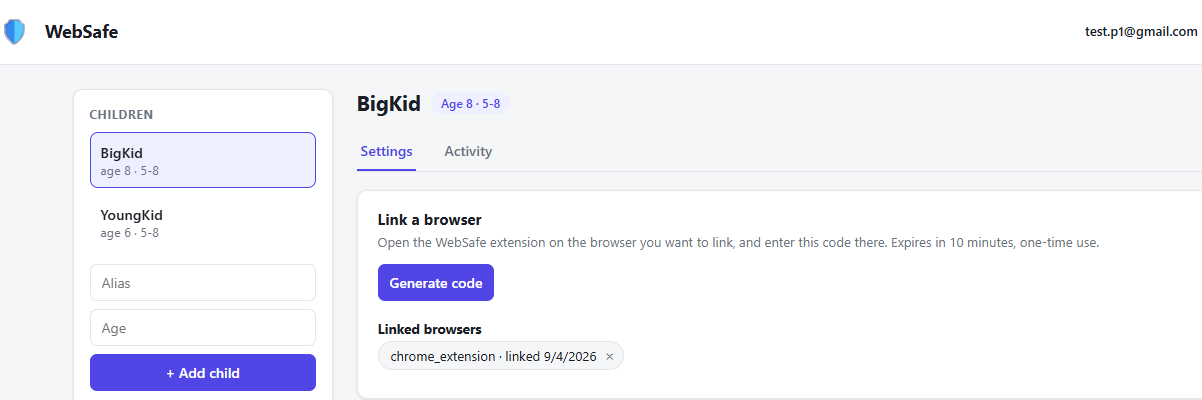
Link it with a 5-digit code

Generate a one-time code from your dashboard and enter it in the extension on their laptop. That's the whole pairing — no password ever touches their device.

The WebSafe dashboard showing two child profiles in the sidebar, an alias and age form to add another, and a Generate code button for linking a browser
Adding a child and generating their linking code, from the same screen.
B — How it decides

You see the pattern, never the page

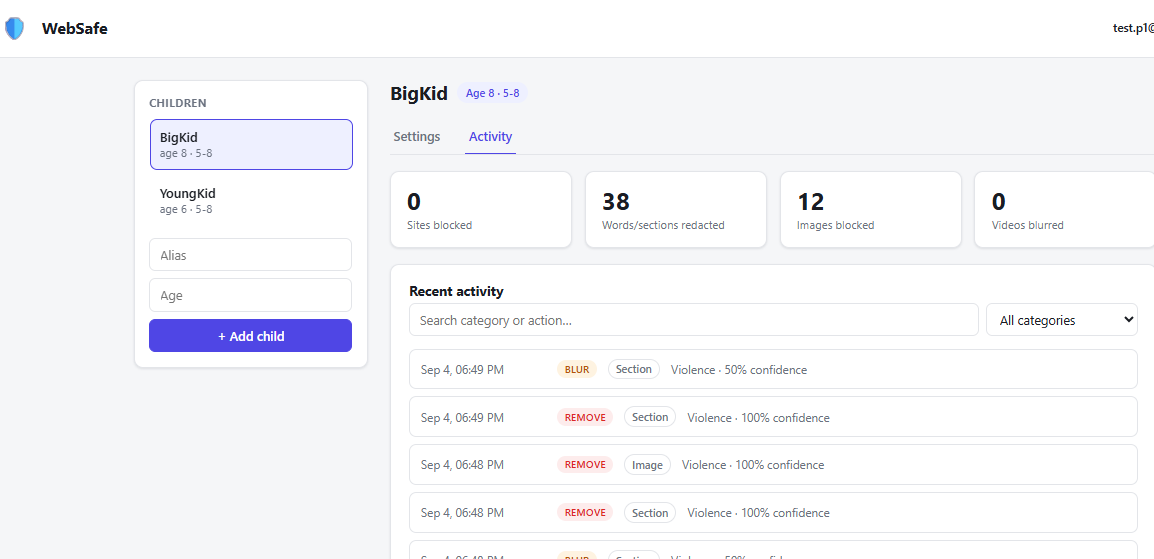
Your dashboard shows a category and how often it came up — never the specific page, image, or words. That's not a limitation, it's the point: a running record of exactly what your child looked at would turn every conversation into cross-examination. A pattern — flagged for violence three times this week — gives you something to actually act on: a moment to check in or adjust a setting, without either of you having to relive one specific, awkward page together.

WebSafe's activity tab showing quick counts (sites blocked, words and sections redacted, images blocked, videos blurred) and a log list by category and confidence, with no page content shown
Category, action, confidence — that's the whole record. No pages, no images, no words.

Real pages, actually filtered

Not staged mockups — screenshots from live sites, taken with WebSafe running.

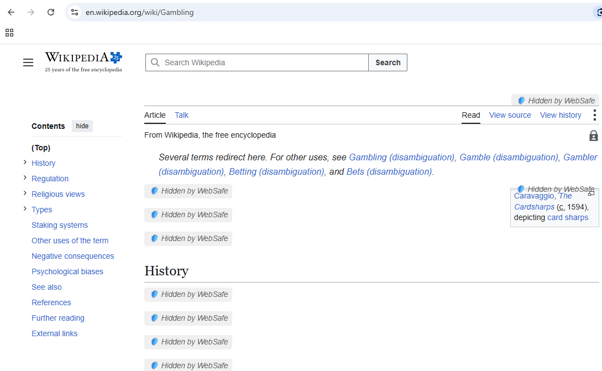
Wikipedia's Gambling article with several paragraphs and an inline image hidden behind 'Hidden by WebSafe' labels
Wikipedia, mid-article

The Gambling article stays readable — only the specific paragraphs and inline image that cross this child's threshold are hidden, not the whole page.

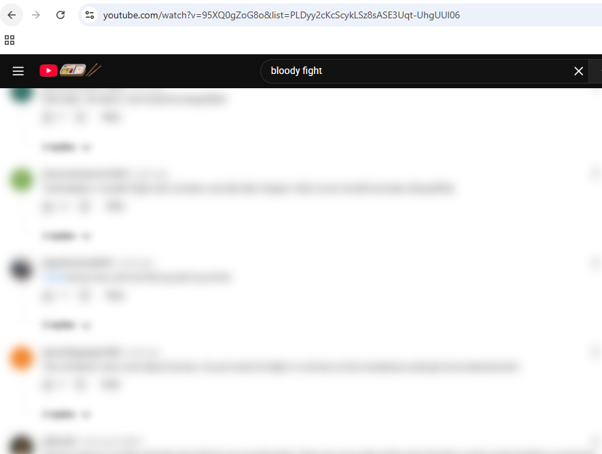
YouTube comments under a video, most of them blurred out individually while a few stay readable
YouTube comments, one by one

Every comment is judged on its own — the graphic replies under this video are blurred while the ordinary ones next to them stay visible.

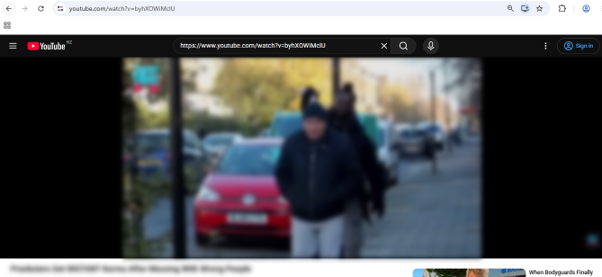
A YouTube video player fully blurred, with the page's address bar showing the video URL
A video, not just its title

This video was flagged and blurred entirely — WebSafe captures an actual frame from the video itself and scores what's shown, rather than trusting the title or a thumbnail that might not exist.

Where it still needs you

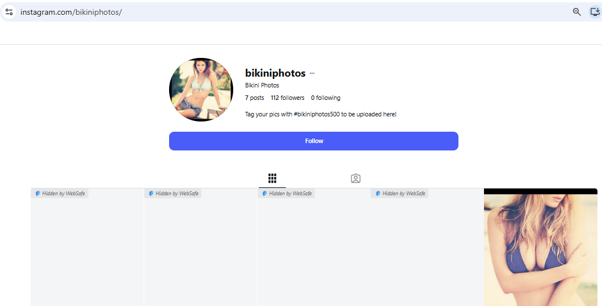
An Instagram account grid with four photos hidden behind 'Hidden by WebSafe' labels and one bikini photo still visible, uncaught

Four of the five photos on this account were caught and hidden automatically. One wasn't — you can see it, uncropped, above. We're showing you that on purpose.

No filter, this one included, catches everything every time. WebSafe is a strong second layer for the browsing your child does on their own — not a replacement for staying involved and having the conversation.

Built for how kids actually browse

Ten things WebSafe does that a blocklist can't.

Understands context, not just keywords

Text and images are read for actual meaning — euphemism, implication, visual content — evaluated fresh against each child's own settings, not matched to a static word list.

Works on virtually any website

No fixed site list to maintain — filtering runs generically on page text and images everywhere, with extra tuning for popular sites.

Age-based presets, fully adjustable

Every profile starts with sensitivity defaults for age, then you can fine-tune violence, sexual content, drugs, gambling, hate speech, self-harm and profanity independently.

Custom rules per child

Add your own keyword lists — block, redact or allow — and domain lists, layered on top of the AI judgment for the cases you know better than any model.

One dashboard, any browser

Profiles, thresholds, keyword and domain lists, linked devices and activity — all from your own browser, never locked inside your child's.

Secure linking, no passwords on-device

A short-lived five-digit code links a browser to a profile. Nothing your child needs to remember or that can leak from their device.

Kids can't quietly switch it off

A child can request to unlink their browser, but finishing that requires a code that only ever appears on the parent dashboard.

Insight without surveillance

You see the category flagged and the action taken — allowed, blurred or removed — never the actual page text, image or a browsing history.

Catches video previews and thumbnails

Inappropriate content in video previews is caught too, including thumbnails generated without a standard preview image.

Keyword and domain rules don't need a connection

Your keyword lists and domain blocks keep working even if the network drops — they run locally. AI-based judgment does need a connection; if it's briefly unreachable, that specific check is skipped rather than the page being blocked outright, and picks back up as soon as you're back online.

Set up your first child profile in about two minutes.